
Find relief from sciatica
Targeted treatments to ease your pain.
Sciatica Treatment
Do you feel frustrated after trying countless treatments that just don’t seem to work? Sciatica causes pain along the sciatic nerve, running from your lower back through your hips and legs. It can make simple day today tasks highly difficult, and the pain can range from a dull ache to sharp, shooting sensations that disrupt your daily life. We have treatments to target the root cause, ease your discomfort, and help you move freely again and put a final end to the pain your have to live with each day.
Causes of sciatica?
Sciatica is rarely caused by one thing. It is something that builds up over time leading to the onset of pain. Just like tooth decay it doesn’t happen overnight; it’s been building up for years and pain is the last symptom to surface.

Herniated Disc
A slipped disc can press on your sciatic nerve, causing pain and inflammation. We use gentle spinal adjustments to reduce pressure on this nerve.

Spinal Stenosis
Narrowing of your spinal canal can pressure the nerve roots, leading to sciatic pain. Improving your spinal mobility and posture can ease this pressure.

Piriformis Syndrome
Tightness in your piriformis muscle can irritate the sciatic nerve. We help release muscle tension and improve your flexibility to reduce discomfort.

Pelvic Misalignment
Imbalances in your pelvis can stress your sciatic nerve. We use realignment techniques to reduce strain on your sciatic nerve.

Degenerative Disc Disease
Wear and tear on your spinal discs can cause nerve compression and sciatica. We help by improving your flexibility and reducing strain with exercises and mobilisation.

Muscle Strain or Injury
Injury or overuse of your lower back muscles can inflame your sciatic nerve. We use massage, soft tissue techniques, and exercises to relieve inflammation and improve muscle function.
Help me to reduce my sciatica pain.
Get the relief you deserve now
How we treat sciatica
We use non-invasive treatments tailored to address your sciatica at its source, ease your pain, and restore your mobility. Our approach is drug-free, so you can ditch those pain killers with their side effects and choose long term natural relief instead.

Spinal Adjustments
We offer gentle adjustments to realign your spine, reduce nerve pressure, and restore your movement, easing your sciatic pain

Massage Therapy
Our targeted techniques relieve your muscle tension, improve circulation, and reduce inflammation in areas affecting your sciatic nerve.

Acupuncture
Acupuncture stimulates specific points to reduce your nerve irritation, relax your tight muscles, and promote pain relief.

Postural Realignment
We correct your pelvic or spinal misalignments to improve weight distribution, reducing stress on your sciatic nerve.

Stretching and Strengthening Exercises
We give you personalised exercises to improve your flexibility, strengthen your supporting muscles, and reduce your risk of recurring pain.

Lifestyle Advice
We offer advice on posture, movement, and ergonomics to help prevent strain and support your long-term recovery from sciatica.
3 phases of sciatica treatment
Pain relief care
To start, we reduce your sciatica pain as quickly as possible, so you can start feeling more comfortable and mobile.
Corrective care
Then, we address the root cause of your sciatica, working to correct the issue and prevent future flare-ups.
Wellness care
Finally, we help you maintain a healthy spine and lifestyle to keep sciatica at bay and promote ongoing well-being.
“Whilst waiting for an appointment with the neurosurgeon, a member of my church suggested I try osteopathy, and the remarkable progress I have made in my recovery rids the need for a surgical operation.”
Let’s Talk! Get a Free Telephone Consultation!
Have questions? Get expert advice at no cost—schedule your free call today!
Sciatica
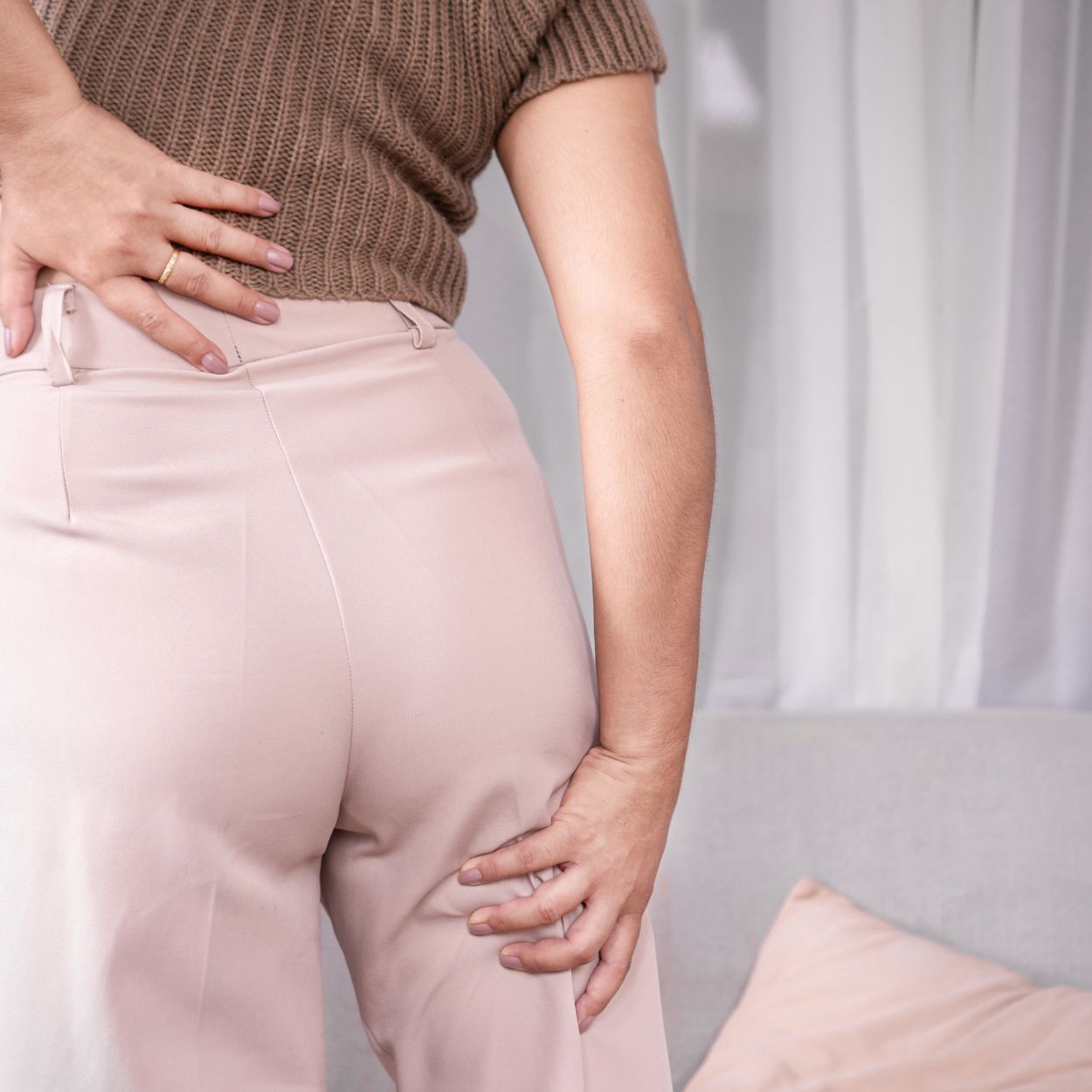
Sciatica is pain associated with irritation of a nerve in the lower back, typically travelling through the buttock and down one leg. It may also involve tingling, numbness or weakness. Sciatica is not a medical diagnosis, but rather a symptom of an underlying condition that irritates or compresses the sciatic nerve
Sciatica may feel like shooting, burning or electric pain travelling down a leg. Some people also notice pins and needles, numbness or changes in strength. Symptoms vary and should be assessed if persistent or severe.
Sciatica can occur when a nerve root in the lower back is irritated, sometimes by a herniated disc or age-related spinal changes. Not every case has a clearly identifiable cause.
An osteopath can help by applying manual therapy-like spinal mobilisation and massage-to relieve physical pressure on the sciatic nerve. Because sciatica is a symptom of an underlying issue, osteopathic care directly aligns with the National Institute for Health and Care Excellence “NICE” guidelines by combining these physical techniques with tailored exercises to restore spinal movement and speed up tissue recovery. Depending on the findings, referral for medical assessment may be more suitable.
Many cases improve over weeks to a few months, but some can take longer. The outlook depends on the cause and severity. Seek medical advice if symptoms are worsening or not improving.
Gentle walking may help some people stay active, provided it does not significantly worsen symptoms. Start with manageable distances and adjust according to your response.
Some gentle movements may feel helpful, but aggressive stretching can aggravate nerve-related symptoms. Exercises should be chosen according to your presentation; stop if pain, tingling or weakness worsens.
Yes. Irritation of a spinal nerve may cause altered sensation or weakness. New or worsening weakness needs prompt medical assessment, and bladder or bowel changes or saddle numbness require emergency care.
Sciatica is a symptom pattern linked to irritation of nerves supplying the leg. People sometimes call this a trapped or pinched nerve, but the exact mechanism varies and requires assessment.
Seek emergency medical attention if you develop difficulty passing urine, loss of bladder or bowel control, numbness around the groin or bottom, or rapidly progressing weakness. These can indicate a serious nerve problem.